
News
Juli 4, 2024
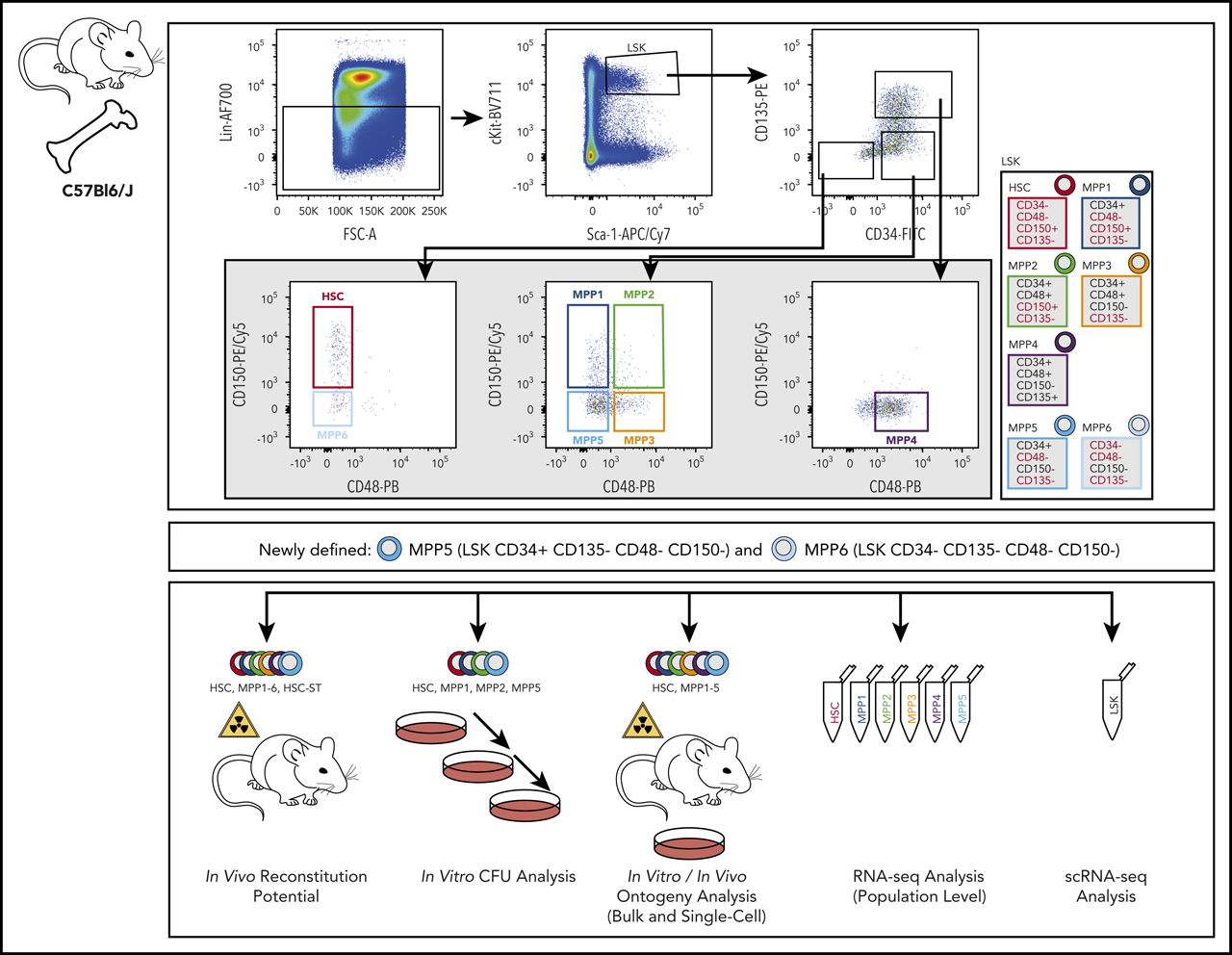
Hematopoietic stem cells (HSCs) and distinct multipotent progenitor (MPP) populations (MPP1-4) contained within the Lin−Sca-1+c-Kit+ (LSK) compartment have previously been identified using diverse surface-marker panels. Here, we phenotypically define and functionally characterize MPP5 (LSK CD34+CD135−CD48−CD150−). Upon transplantation, MPP5 supports initial emergency myelopoiesis followed by stable contribution to the lymphoid lineage. MPP5, capable of generating MPP1-4 but not HSCs, represents a dynamic and versatile component of the MPP network. To characterize all hematopoietic stem and progenitor cells, we performed RNA-sequencing (RNA-seq) analysis to identify specific transcriptomic landscapes of HSCs and MPP1-5. This was complemented by single-cell RNA-seq analysis of LSK cells to establish the differentiation trajectories from HSCs to MPP1-5. In agreement with functional reconstitution activity, MPP5 is located immediately downstream of HSCs but upstream of the more committed MPP2-4. This study provides a comprehensive analysis of the LSK compartment, focusing on the functional and molecular characteristics of the newly defined MPP5 subset.
März 19, 2021
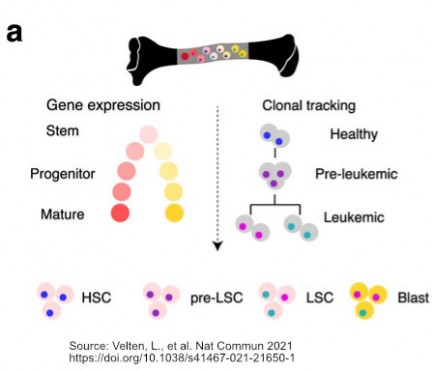
A new method allows stem cells and cancer stem cells to be studied at the single cell level and the resulting cell clones to be traced directly. The method was developed by scientists from the Stem Cell Institute HI-STEM*, the German Cancer Research Center (DKFZ), the European Molecular Biology Laboratory (EMBL) and the Center for Genome Regulation in Barcelona. Studying thousands of individual cells in parallel, the researchers combined the analysis of the genomic cancer mutations with the associated expression profiles.
Jan. 27, 2021
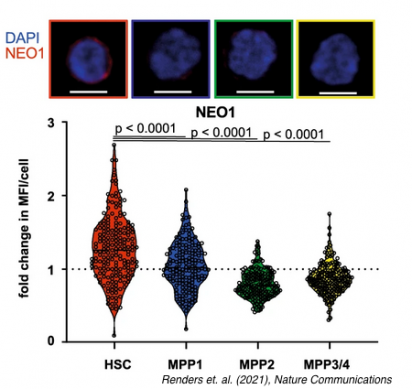
A characteristic feature of all stem cells is their ability to self-renew. But how is this potential maintained throughout life? Scientists at the German Cancer Research Center (DKFZ) and the Heidelberg Institute for Stem Cell Technology and Experimental Medicine* (HI-STEM) have now discovered in mice that cells in the so-called "stem cell niche" are responsible for this: Blood vessel cells of the niche produce a factor that stimulates blood stem cells and thus maintains their self-renewal capacity. With the decades of life, the production of this factor ceases and blood stem cells begin to age.
Juli 17, 2019
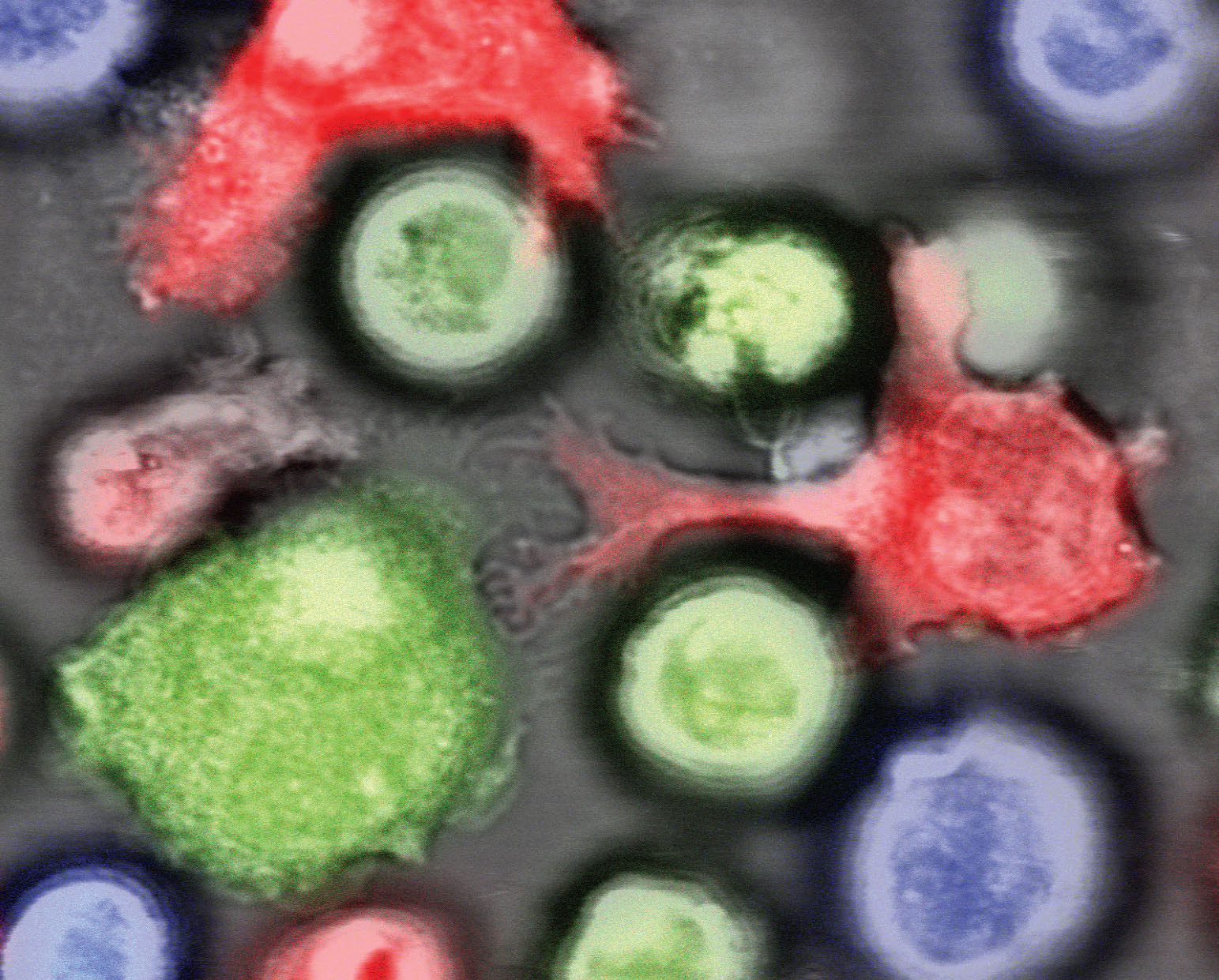
Leukemia stem cells protect themselves against the immune defense by suppressing a target molecule for killer cells. This protective mechanism can be tricked with drugs. In the journal "Nature", scientists from Basel, Tübingen and Heidelberg describe the new therapeutic approaches that can possibly be derived from these results. Joint press release of the German Cancer Research Center (DKFZ), the German Cancer Consortium (DKTK), and the University Hospital Tübingen
Mai 29, 2019
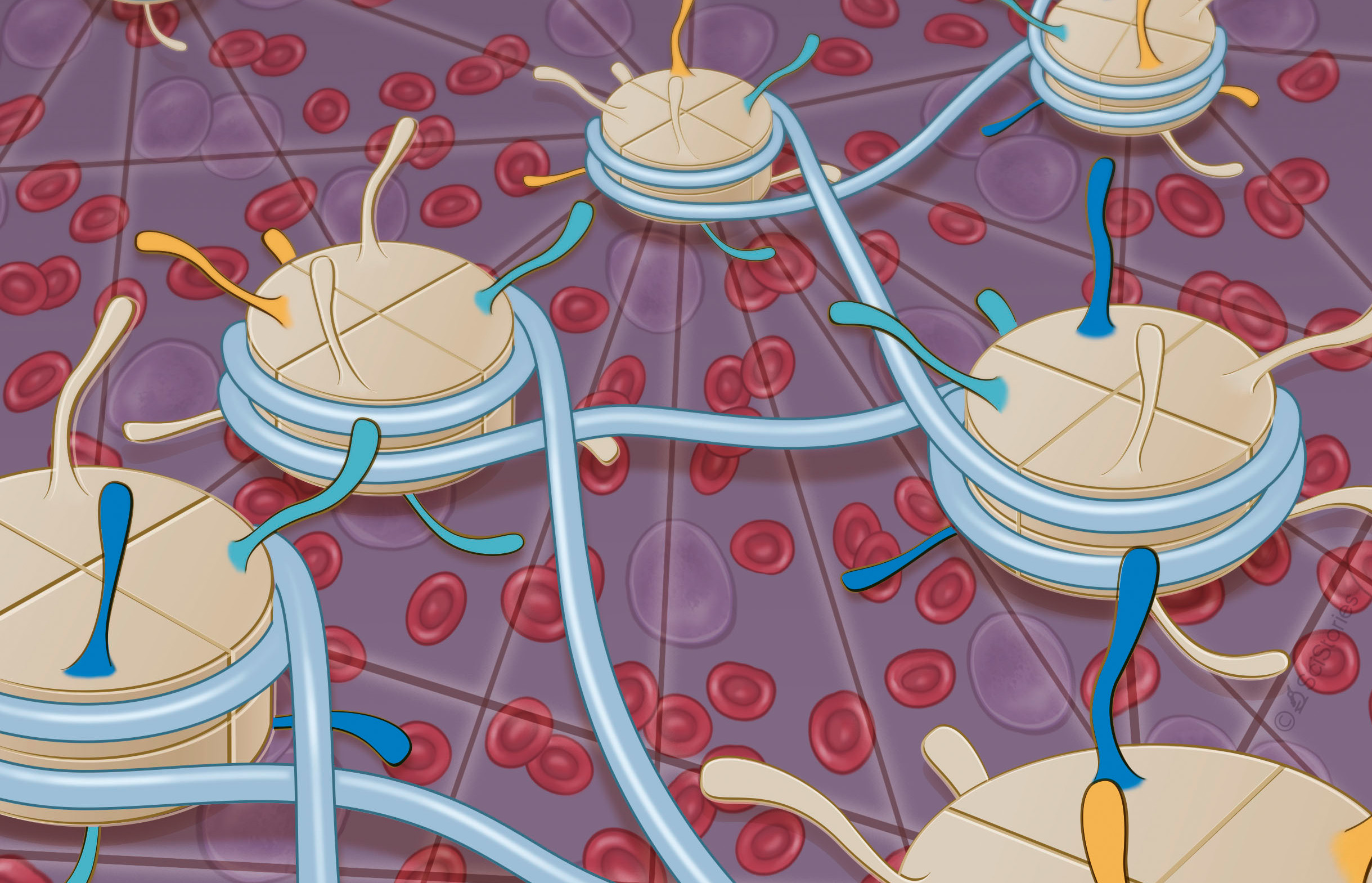
For the development of CLL, a common form of blood cancer, not only DNA mutations but also faulty epigenetic signals are responsible. These signals determine, in both healthy and cancerous cells, which parts of the genetic information are actually read. Scientists at the German Cancer Research Center (DKFZ) have systematically investigated the epigenetic signals in CLL cells as part of a national research consortium. From their findings, they were able to develop a model that explains how faulty gene regulation occurs. This model allows researchers to predict which genes relevant to cancer development are deregulated in CLL cells, which can significantly impact the prognosis of the disease.
Dez. 6, 2018
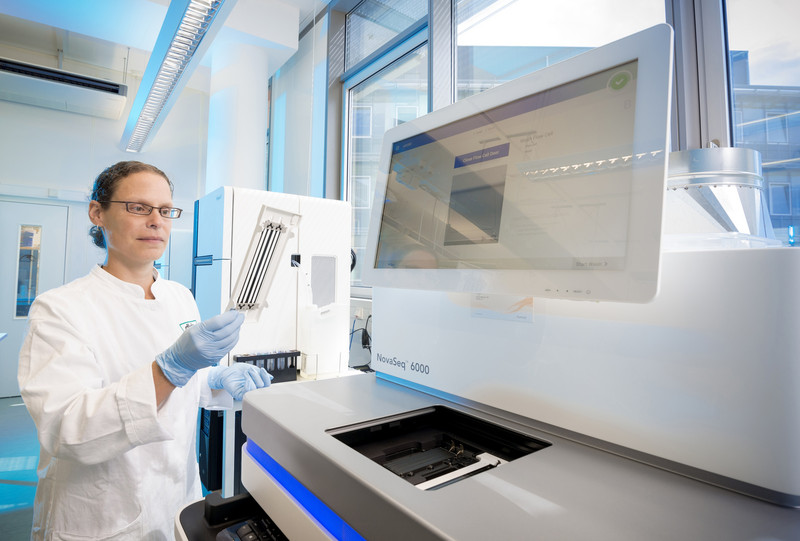
Scientists today are able to observe tumor cells in increasing detail and thus gain a better understanding of how cancer cells differ from healthy ones. Doctors and scientists from the National Center for Tumor Diseases (NCT), the Institute of Pathology at Heidelberg University Hospital (UKHD) and the German Cancer Consortium (DKTK) completed a prospective study that systematically verified data on cancer genome analysis. Conducted over a period of three years, the study examined more than 200 patients with tumor diseases that are at an advanced stage or difficult to treat who underwent a cancer genome analysis within the scope of the NCT/DKTK-MASTER program. In the validation study as part of the program, the scientists show how comprehensive cancer genome analysis and evaluation can be optimized in such a way that they can be used for clinical application.
Juli 4, 2024
Hematopoietic stem cells (HSCs) and distinct multipotent progenitor (MPP) populations (MPP1-4) contained within the Lin−Sca-1+c-Kit+ (LSK) compartment have previously been identified using diverse surface-marker panels. Here, we phenotypically define and functionally characterize MPP5 (LSK CD34+CD135−CD48−CD150−). Upon transplantation, MPP5 supports initial emergency myelopoiesis followed by stable contribution to the lymphoid lineage. MPP5, capable of generating MPP1-4 but not HSCs, represents a dynamic and versatile component of the MPP network. To characterize all hematopoietic stem and progenitor cells, we performed RNA-sequencing (RNA-seq) analysis to identify specific transcriptomic landscapes of HSCs and MPP1-5. This was complemented by single-cell RNA-seq analysis of LSK cells to establish the differentiation trajectories from HSCs to MPP1-5. In agreement with functional reconstitution activity, MPP5 is located immediately downstream of HSCs but upstream of the more committed MPP2-4. This study provides a comprehensive analysis of the LSK compartment, focusing on the functional and molecular characteristics of the newly defined MPP5 subset.
März 19, 2021
A new method allows stem cells and cancer stem cells to be studied at the single cell level and the resulting cell clones to be traced directly. The method was developed by scientists from the Stem Cell Institute HI-STEM*, the German Cancer Research Center (DKFZ), the European Molecular Biology Laboratory (EMBL) and the Center for Genome Regulation in Barcelona. Studying thousands of individual cells in parallel, the researchers combined the analysis of the genomic cancer mutations with the associated expression profiles.
Jan. 27, 2021
A characteristic feature of all stem cells is their ability to self-renew. But how is this potential maintained throughout life? Scientists at the German Cancer Research Center (DKFZ) and the Heidelberg Institute for Stem Cell Technology and Experimental Medicine* (HI-STEM) have now discovered in mice that cells in the so-called "stem cell niche" are responsible for this: Blood vessel cells of the niche produce a factor that stimulates blood stem cells and thus maintains their self-renewal capacity. With the decades of life, the production of this factor ceases and blood stem cells begin to age.
Juli 17, 2019
Leukemia stem cells protect themselves against the immune defense by suppressing a target molecule for killer cells. This protective mechanism can be tricked with drugs. In the journal "Nature", scientists from Basel, Tübingen and Heidelberg describe the new therapeutic approaches that can possibly be derived from these results. Joint press release of the German Cancer Research Center (DKFZ), the German Cancer Consortium (DKTK), and the University Hospital Tübingen
Mai 29, 2019
For the development of CLL, a common form of blood cancer, not only DNA mutations but also faulty epigenetic signals are responsible. These signals determine, in both healthy and cancerous cells, which parts of the genetic information are actually read. Scientists at the German Cancer Research Center (DKFZ) have systematically investigated the epigenetic signals in CLL cells as part of a national research consortium. From their findings, they were able to develop a model that explains how faulty gene regulation occurs. This model allows researchers to predict which genes relevant to cancer development are deregulated in CLL cells, which can significantly impact the prognosis of the disease.
Dez. 6, 2018
Scientists today are able to observe tumor cells in increasing detail and thus gain a better understanding of how cancer cells differ from healthy ones. Doctors and scientists from the National Center for Tumor Diseases (NCT), the Institute of Pathology at Heidelberg University Hospital (UKHD) and the German Cancer Consortium (DKTK) completed a prospective study that systematically verified data on cancer genome analysis. Conducted over a period of three years, the study examined more than 200 patients with tumor diseases that are at an advanced stage or difficult to treat who underwent a cancer genome analysis within the scope of the NCT/DKTK-MASTER program. In the validation study as part of the program, the scientists show how comprehensive cancer genome analysis and evaluation can be optimized in such a way that they can be used for clinical application.
Juli 4, 2024
Hematopoietic stem cells (HSCs) and distinct multipotent progenitor (MPP) populations (MPP1-4) contained within the Lin−Sca-1+c-Kit+ (LSK) compartment have previously been identified using diverse surface-marker panels. Here, we phenotypically define and functionally characterize MPP5 (LSK CD34+CD135−CD48−CD150−). Upon transplantation, MPP5 supports initial emergency myelopoiesis followed by stable contribution to the lymphoid lineage. MPP5, capable of generating MPP1-4 but not HSCs, represents a dynamic and versatile component of the MPP network. To characterize all hematopoietic stem and progenitor cells, we performed RNA-sequencing (RNA-seq) analysis to identify specific transcriptomic landscapes of HSCs and MPP1-5. This was complemented by single-cell RNA-seq analysis of LSK cells to establish the differentiation trajectories from HSCs to MPP1-5. In agreement with functional reconstitution activity, MPP5 is located immediately downstream of HSCs but upstream of the more committed MPP2-4. This study provides a comprehensive analysis of the LSK compartment, focusing on the functional and molecular characteristics of the newly defined MPP5 subset.
März 19, 2021
A new method allows stem cells and cancer stem cells to be studied at the single cell level and the resulting cell clones to be traced directly. The method was developed by scientists from the Stem Cell Institute HI-STEM*, the German Cancer Research Center (DKFZ), the European Molecular Biology Laboratory (EMBL) and the Center for Genome Regulation in Barcelona. Studying thousands of individual cells in parallel, the researchers combined the analysis of the genomic cancer mutations with the associated expression profiles.
Jan. 27, 2021
A characteristic feature of all stem cells is their ability to self-renew. But how is this potential maintained throughout life? Scientists at the German Cancer Research Center (DKFZ) and the Heidelberg Institute for Stem Cell Technology and Experimental Medicine* (HI-STEM) have now discovered in mice that cells in the so-called "stem cell niche" are responsible for this: Blood vessel cells of the niche produce a factor that stimulates blood stem cells and thus maintains their self-renewal capacity. With the decades of life, the production of this factor ceases and blood stem cells begin to age.
Juli 17, 2019
Leukemia stem cells protect themselves against the immune defense by suppressing a target molecule for killer cells. This protective mechanism can be tricked with drugs. In the journal "Nature", scientists from Basel, Tübingen and Heidelberg describe the new therapeutic approaches that can possibly be derived from these results. Joint press release of the German Cancer Research Center (DKFZ), the German Cancer Consortium (DKTK), and the University Hospital Tübingen
Mai 29, 2019
For the development of CLL, a common form of blood cancer, not only DNA mutations but also faulty epigenetic signals are responsible. These signals determine, in both healthy and cancerous cells, which parts of the genetic information are actually read. Scientists at the German Cancer Research Center (DKFZ) have systematically investigated the epigenetic signals in CLL cells as part of a national research consortium. From their findings, they were able to develop a model that explains how faulty gene regulation occurs. This model allows researchers to predict which genes relevant to cancer development are deregulated in CLL cells, which can significantly impact the prognosis of the disease.
Dez. 6, 2018
Scientists today are able to observe tumor cells in increasing detail and thus gain a better understanding of how cancer cells differ from healthy ones. Doctors and scientists from the National Center for Tumor Diseases (NCT), the Institute of Pathology at Heidelberg University Hospital (UKHD) and the German Cancer Consortium (DKTK) completed a prospective study that systematically verified data on cancer genome analysis. Conducted over a period of three years, the study examined more than 200 patients with tumor diseases that are at an advanced stage or difficult to treat who underwent a cancer genome analysis within the scope of the NCT/DKTK-MASTER program. In the validation study as part of the program, the scientists show how comprehensive cancer genome analysis and evaluation can be optimized in such a way that they can be used for clinical application.